
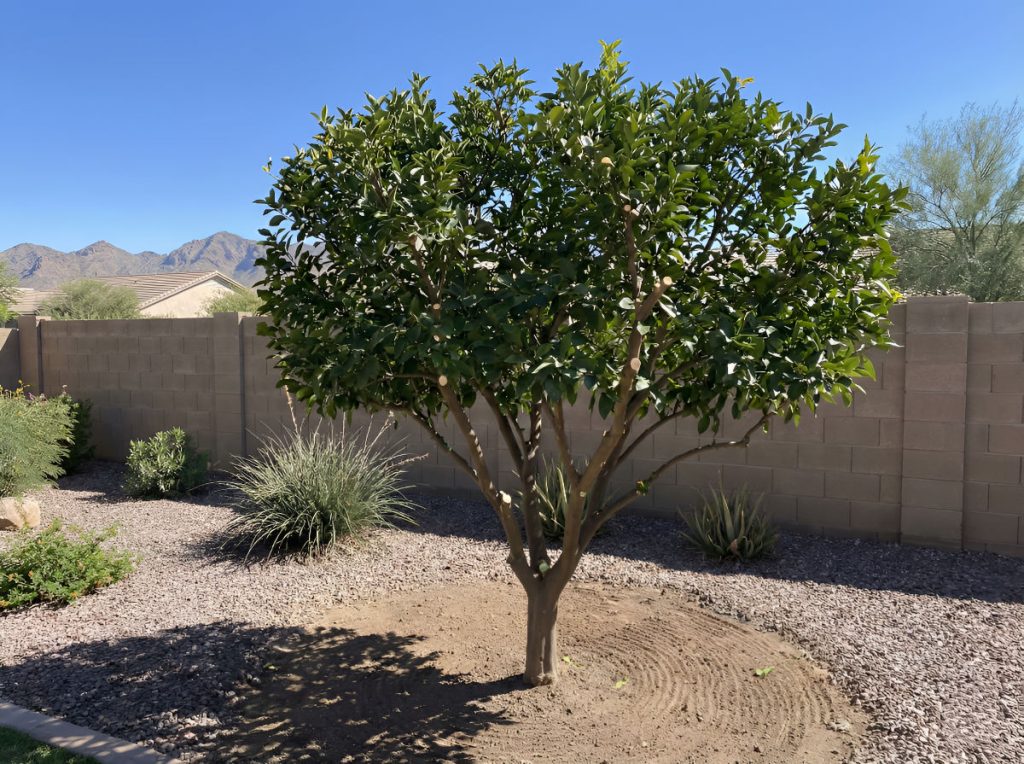
Phoenix’s desert landscape creates distinct patterns in that national figure—mesquite trees, palo verde, palm fronds, oleander, and citrus rather than the oak leaves and maple branches dominating East Coast yard waste. The city’s composting infrastructure processes 22.3 million tons of yard waste nationally at a 63% composting rate,2 but Phoenix-specific materials present challenges that municipal collection systems struggle to manage.
Jose and the Cee J Junk Removal team handle landscape debris removal across Phoenix’s residential properties, from routine pruning overflow to major tree removals to monsoon storm cleanup. The truck-and-trailer system accommodates volume and material types that Phoenix’s bulk trash appointments can’t accept—oversized palm fronds, tree trunk sections, and debris loads exceeding the 10-cubic-yard appointment limit.
Phoenix Public Works maintains specific requirements for yard waste collection through the city’s appointment-based bulk trash system. Palm fronds and oleander trimmings must be “less than four feet in length and 12 inches in diameter” and “separated from other bulk trash items.”3 Grass clippings, leaves, straw, flowers, and small prunings qualify for standard collection, but Phoenix prohibits several material types from bulk trash:
These exclusions route major landscaping projects—tree removals, yard renovations, desert-to-lawn conversions, monsoon cleanup—away from municipal collection. The city’s transfer station accepts yard waste during operating hours (Monday-Friday 5:30 a.m.-5 p.m., Saturday 6 a.m.-3 p.m.5), but homeowners must transport materials themselves and separate yard waste from contaminated debris.
Phoenix also operates a seasonal collection schedule. Yard waste gets collected year-round but only processed for recycling from March 1 through December 24. Small amounts generated during January and February go to trash disposal rather than composting facilities.6 Christmas trees represent the exception—the city collects and recycles trees during the first two weeks of January.
By weight, grass constitutes approximately half of all yard waste, with leaves and brush each providing one quarter.7 By volume, however, leaves dominate due to low density. Phoenix’s landscape materials follow different patterns:
Date palms, Mexican fan palms, and other species common in Phoenix landscaping generate heavy, fibrous fronds. A mature Mexican fan palm can produce 50-100 pounds of fronds annually through natural shedding and required trimming. Fronds exceeding Phoenix's 4-foot/12-inch maximum require cutting before municipal collection, creating labor that homeowners often want to avoid.
Mesquite, palo verde, and ironwood trees drop substantial branch material. Mesquite thorns (1-2 inches long) create handling challenges and puncture standard yard waste bags. Palo verde's green bark photosynthesizes, reducing leaf volume compared to deciduous trees, but branches grow rapidly and require frequent pruning to prevent utility line interference.
Orange, lemon, and grapefruit trees require annual pruning for fruit production. Winter pruning (December-January) generates branches unsuitable for municipal processing during that season's trash disposal routing. Summer pruning avoids that timing issue but occurs during Phoenix's peak heat (June-August), when outdoor labor becomes dangerous.
This drought-tolerant shrub common in Phoenix landscaping requires regular pruning but contains toxic compounds (cardiac glycosides) throughout the plant. While composting neutralizes toxicity, many facilities separate oleander from other yard waste to prevent accidental livestock or pet exposure to fresh trimmings.
Phoenix lawns (Bermuda grass predominates) generate substantial clippings during growing season (April-October). The EPA recommends "grasscycling"—leaving clippings on lawns to return nitrogen to soil.8 A typical 5,000-square-foot Phoenix lawn generates 200-300 pounds of clippings annually if bagged, but grasscycling eliminates disposal needs while reducing water requirements (clippings improve moisture retention).
Phoenix’s monsoon season (June-September) generates substantial landscape debris through high winds, microbursts, and occasional haboobs (dust storms). Wind events exceeding 40 mph topple trees, break branches, and scatter palm fronds across properties. The National Weather Service documents 20-30 significant wind events annually in the Phoenix metro area during monsoon season.
Storm debris creates volume surges that overwhelm municipal collection capacity. A single monsoon microburst affecting a neighborhood might generate 100-200 cubic yards of debris across 20-30 properties. Phoenix’s bulk trash system allows 10 cubic yards per appointment, requiring homeowners to schedule multiple appointments (limited to four annually total) or find alternative disposal.
Tree removal after storm damage involves:
Cee J handles storm cleanup logistics that exceed municipal service scope—same-day removal when access is blocked, mixed debris sorting (wood to composting, contaminated materials to landfill), and volume capacity for major wind damage events.
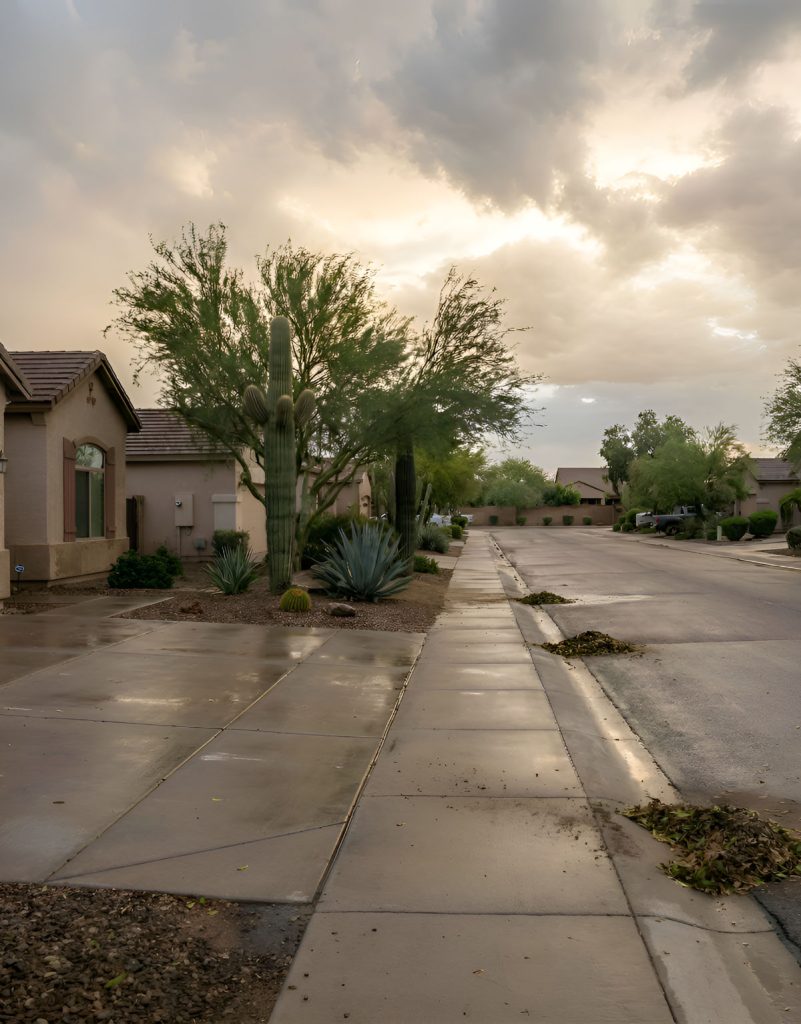
Phoenix City Code prohibits bulk trash collection of “any amount generated by a contractor.”10 Tree removal services, landscaping contractors, and yard renovation companies must arrange private disposal for debris they generate. This regulation creates a disposal requirement for homeowners hiring tree services—contractors cut and stack debris, but removal becomes the homeowner’s responsibility unless specifically contracted.
Many Phoenix homeowners discover this distinction after tree removal. A mature mesquite tree generates 1,500-3,000 pounds of trunk and branch material. Stump grinding (common practice to prevent regrowth) adds another 500-1,200 pounds of wood chips and dirt. Contractors stack material curbside, but municipal collection won’t remove contractor-generated debris regardless of who pays disposal costs.
Professional landscapers typically include debris removal in project quotes ($200-800 for tree removal depending on size and access), but DIY tree work leaves disposal to homeowners. Cee J provides the disposal pathway for both scenarios—contractor-generated debris that homeowners need removed and DIY projects exceeding municipal collection limits.
Phoenix water conservation initiatives promote xeriscape landscaping—drought-tolerant plants requiring minimal irrigation. Conversions from traditional grass lawns to rock/native plant landscapes generate distinct disposal challenges:
1,000 square feet of grass sod weighs approximately 2,000-3,000 pounds when removed with 1-2 inches of root zone. Phoenix prohibits sod from bulk trash (dirt contamination), routing this material to transfer stations. At $55 per ton after the first free ton, a 3,000-square-foot lawn removal generates $165-275 in disposal fees plus transport labor.
Existing landscaping (oleander hedges, mulberry trees, privet bushes) gets removed during xeriscape conversions. Root balls contain soil that disqualifies them from yard waste collection, requiring separation at transfer stations or private disposal.
While technically not yard waste, desert landscape installations often involve removing old rock groundcover before new material placement. Phoenix transfer stations accept rock for disposal but charge by weight rather than treating it as recyclable material.
The reverse transition—xeriscape to traditional landscaping—generates less volume but includes material unsuitable for composting (weed barrier fabric, irrigation components, decorative rock requiring cleaning before reuse).
Yard waste composting diverts organic material from landfills while creating a valuable soil amendment. According to the EPA, composting reduces yard waste volume by up to 50% while improving soil moisture retention and reducing chemical fertilizer needs.11 For Phoenix’s water-stressed desert environment, those benefits carry particular weight.
Municipal composting facilities operate on gate fees—charges to waste haulers for depositing material. Residential yard waste typically qualifies for lower rates than mixed waste, incentivizing separation. Finished compost sells for $15-40 per cubic yard depending on quality and certification (organic labeling, contaminant testing, nutrient analysis).
The economics support infrastructure investment in markets with sufficient volume. Phoenix’s year-round growing season generates steady yard waste flows, unlike northern climates with seasonal concentration (fall leaves dominating October-November). Consistent volume allows composting facilities to operate efficiently without seasonal idle capacity.
Organic material decomposing in anaerobic landfill conditions produces methane, a greenhouse gas 25 times more potent than carbon dioxide. Composting, through aerobic decomposition, produces primarily carbon dioxide and water vapor while avoiding methane generation.
Compost application to soil increases organic carbon content, sequestering atmospheric carbon in stable soil compounds. Phoenix's desert soils contain minimal organic matter (0.5-1.5% typical), making compost additions impactful for both carbon sequestration and soil health.
Compost-amended soil retains moisture more effectively than untreated desert soil, reducing irrigation requirements. In Phoenix's climate (7-8 inches annual rainfall, 100+ days above 100°F), water conservation benefits from soil amendment directly reduce Colorado River demand.
Annual tree and shrub maintenance generates 2-8 cubic yards per property depending on landscape maturity. Phoenix's pruning season (November-February for most species, post-monsoon for storm damage) concentrates yard waste generation.
A 30-foot mesquite generates 4-8 cubic yards of debris. A mature palm (40+ feet) produces 6-12 cubic yards. Multi-tree removals (clearing for pool installation, view preservation, desert landscape conversion) can exceed 50 cubic yards.
Storm debris varies by event severity. Minor wind events (40-50 mph gusts) generate 1-3 cubic yards per affected property. Major microbursts (70+ mph winds) can produce 10-20 cubic yards from downed trees and scattered branches.
Full-property landscape overhauls (removing existing plants, installing new design) generate 15-40 cubic yards depending on lot size and existing maturity. Half-acre Paradise Valley properties with mature landscaping can exceed 60 cubic yards during renovations.
Phoenix's deciduous trees (mulberry, ash, sycamore in older neighborhoods) drop leaves in late winter/early spring. A mature mulberry produces 8-12 bags of leaves, with multiple trees on large lots creating substantial volumes.
We can’t accept hazardous materials (pesticide-treated vegetation, contaminated soil). Dirt, rock, and soil require separation for proper disposal but aren’t prohibited—we route them to transfer stations rather than composting facilities. Concrete, asphalt, and construction debris fall under different disposal requirements and get quoted separately.
We remove palm fronds of any size. Oversized fronds get cut to manageable lengths for composting facility acceptance or go to transfer stations for grinding/disposal. Phoenix’s municipal system requires homeowners to cut fronds before collection; professional removal eliminates that labor requirement.
Yes, though stump removal typically requires grinding equipment (chainsaw cutting leaves below-grade portions that resprout). We coordinate stump grinding services when needed and remove the resulting wood chips and debris. Root balls from uprooted trees get transported to transfer stations—dirt content disqualifies them from yard waste composting.
Storm cleanup often gets prioritized for same-day or next-day service, particularly when debris blocks access or creates safety hazards. Widespread storm events (affecting multiple neighborhoods simultaneously) may extend scheduling 2-3 days due to volume, but we prioritize emergency access situations.
We handle full-service removal from backyards, side yards, and areas not accessible by truck. Many Phoenix properties have block walls, gates, and landscaping that prevent truck access to debris locations. That’s part of standard service—hauling material from generation point to truck location.
Yard waste meeting composting facility standards (separated from dirt, minimal contamination) goes to commercial composting operations. Material with soil contamination, treated wood, or prohibited items goes to transfer stations for processing. Palm fronds and desert tree materials get ground for mulch or composted depending on facility capabilities.
Transfer stations charge $55/ton after the first free monthly ton for Phoenix residents. A typical tree removal (3,000 pounds of debris) costs $82.50 at the transfer station but requires homeowner transport, loading, and unloading. Professional removal provides pickup, labor, and disposal for flat-rate pricing that eliminates homeowner work and vehicle wear.
Yes. Commercial landscaping generates regular debris from maintenance contracts. We provide volume pricing for property management companies and HOAs with recurring removal needs. Common area renovations (replacing dying palm trees, updating plant selections) generate substantial one-time volumes that exceed routine maintenance capacity.
Often yes, depending on current schedule and project location. Emergency scenarios (tree damage blocking access, pool contamination from storm debris, HOA violation deadlines) get prioritized when possible. Standard projects typically schedule within 24-48 hours.