
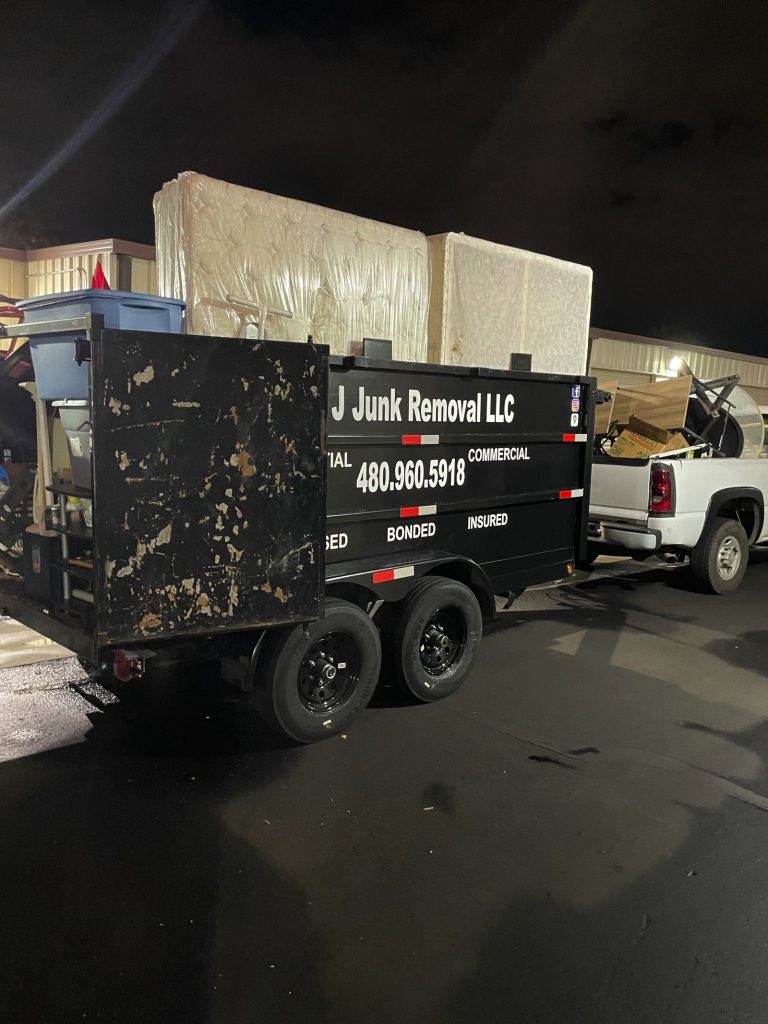
Each mattress occupies 40 cubic feet of landfill space and can persist for over a century, releasing flame retardants, volatile organic compounds, and leachate as synthetic foams and fabrics slowly decompose.2
Phoenix homeowners face particular challenges with mattress disposal. The city’s bulk trash system accepts mattresses through appointment-based collection, but capacity constraints (10 cubic yards per appointment, four annual appointments maximum) make multi-mattress removal difficult. Transfer station drop-offs are free for Phoenix residents (one ton monthly allowance for city trash customers), but transporting king-size mattresses or multiple units requires truck access that many households lack.
Jose and the Cee J Junk Removal team handle mattress disposal across Phoenix neighborhoods, from single-bedroom replacements to estate cleanouts involving multiple beds to rental property turnovers with tenant-abandoned mattresses. The truck-and-trailer configuration accommodates volume that municipal bulk collection struggles to manage while routing recyclable mattresses to proper facilities.
Innerspring coils provide 15-25 pounds of steel per mattress. Spring steel commands scrap prices ($150-300 per ton) that make extraction economically viable for recyclers. Coil systems get separated through automated processing, compacted, and sold to steel mills for melting and repurposing.
Comfort layers in innerspring mattresses and the primary material in all-foam mattresses. Foam constitutes 40-60% of mattress weight but presents recycling challenges. Recent research demonstrates polyurethane foam can be chemically broken down into polyol components for new foam production,4 but most recyclers shred foam for carpet padding or synthetic fiber production. Some facilities convert foam into concrete additives, improving crack resistance and flexural strength.5
Box springs and innerspring perimeter frames yield 15-30 pounds of wood per unit. Clean wood gets chipped for mulch or composite board production. However, many mattresses now use synthetic frames (plastic, composite materials) that complicate recycling.
Cotton, polyester, and blended fabrics covering mattresses total 5-15 pounds per unit. Natural fibers (cotton, wool) can be recycled into industrial wiping cloths or fiber-reinforced composites.6 Synthetic fabrics typically go to waste-to-energy facilities or landfills due to contamination and sorting costs.
Phoenix accepts mattresses through appointment-based collection. Residents schedule pickups online or via phone (602-262-6251), with appointments available weeks to months in advance.8 The system’s constraints include:
The North Gateway Transfer Station accepts mattresses during operating hours (Monday-Friday 5:30 a.m.-5 p.m., Saturday 6 a.m.-3 p.m.).9 Phoenix residents paying city trash fees receive one free ton monthly. A king-size mattress with box spring weighs approximately 150-200 pounds total, allowing 10-13 units before hitting the ton threshold and incurring the $55/ton charge.
The transfer station route requires homeowner transport, however. Mattresses flex and shift during transport, requiring proper securing to avoid highway safety violations. Arizona’s strict unsecured load laws ($250-1,000 fines plus traffic points) make improper mattress transport a costly mistake.
Phoenix-area mattress recyclers operate on commercial terms (drop-off fees, no residential pickup). Bye Bye Mattress—California, Connecticut, Rhode Island, and Oregon’s funded program—doesn’t operate in Arizona. Independent recyclers charge $10-30 per mattress for drop-off processing, with no curbside pickup for individual consumers.
Mattress dumping—abandonment on roadsides, in desert areas, or on vacant lots—represents a $1 million annual cleanup burden according to data from California’s Illegally Dumped Mattress Collection Initiative.10 Phoenix Public Works investigates illegal dumping complaints, but enforcement struggles with the volume of violations.
Abandoned mattresses create multiple problems:
Penalties for illegal dumping in Phoenix can reach thousands of dollars, yet detection and prosecution remain challenging. Many mattress disposals occur at night in industrial areas or undeveloped desert parcels where surveillance is minimal.
Industry research places average mattress lifespan at 13.9 years, with foundations averaging 15.1 years and innerspring and all-foam mattresses at 13.2 years.11 However, actual replacement cycles don’t necessarily reflect durability limits. Several factors trigger early replacement:
Moving, divorce, downsizing, or upgrading from full/queen to king sizes generates functional mattress disposal. A couple moving from a 1,400-square-foot rental to a 2,500-square-foot home might replace all bedding to match new bedroom dimensions.
Mattresses accumulate allergens, dust mites, and body oils over time. Phoenix's low humidity (10-20% during summer months) actually reduces mold and mildew issues compared to humid climates, but allergen accumulation still prompts replacement for sensitive individuals.
Sagging, loss of support, and foam degradation accelerate with body weight and sleep position. A 200-pound side sleeper compresses shoulder and hip zones faster than a 140-pound back sleeper. Ten years might represent severe wear for one user but minimal degradation for another.
Mattress retailers promote 7-10 year replacement cycles through "comfort guarantee" programs and trade-in promotions. While manufacturer warranties often run 10-20 years, marketing emphasizes sleep quality improvements from newer models (memory foam, cooling gel layers, adjustable firmness zones) that didn't exist when current mattresses were purchased.
Estate cleanouts present unique mattress disposal challenges. Deceased estates often contain multiple bedrooms of furniture, including mattresses that family members won’t accept for hygiene reasons. A typical three-bedroom Phoenix home generates 3-6 mattresses (master bed, guest rooms, sometimes daybed or child’s bed storage).
Rental property turnovers involve tenant-abandoned mattresses when leases terminate. Arizona landlord-tenant law provides abandonment procedures, but timeline requirements mean mattresses may sit on properties for weeks while legal waiting periods expire. Property managers need quick removal to prepare units for new tenants, creating demand for same-day or next-day service.
Both scenarios produce mattresses unlikely to meet recycling standards. Heavy wear, staining, odors, or bedbug infestation eliminate recycling pathways, routing these units to landfills. Cee J assesses mattress condition during removal, attempting recycling when feasible but handling contaminated units through proper disposal channels.

Traditional coil-based mattresses (50-150 pounds depending on size and coil count). Box springs add 40-80 pounds. Innerspring units flex during transport, complicating stairway and tight-hallway navigation. Phoenix's climate (low humidity, intense heat) doesn't significantly degrade innerspring mattresses, making many old units structurally sound despite appearance issues.
All-foam construction (60-120 pounds typical). Heavier than comparable innerspring models due to foam density. Memory foam compresses for easier transport but regains shape, making these units challenging to fit through narrow spaces. Heat sensitivity means Phoenix summer storage (garages, outdoor sheds) can degrade foam through heat cycling.
Combine innerspring coils with foam layers (80-180 pounds depending on construction). Often include pillow-top layers that compress easily but don't recover shape, making used hybrid mattresses poor donation candidates even when structurally intact.
Waterbeds (rare in modern Phoenix homes but present in older properties), air mattresses, and adjustable bases require different handling. Waterbed disposal involves drainage (50-250 gallons depending on size), frame disassembly, and vinyl liner disposal. Adjustable bases contain electric motors and control systems requiring electronics recycling.
Habitat for Humanity ReStore, Goodwill, and most charitable organizations reject used mattress donations due to hygiene concerns and liability issues. The few charities accepting mattresses maintain strict standards:
These criteria eliminate most mattresses homeowners want removed. Even gently used mattresses from guest rooms that saw minimal use often fail inspection due to age or minor appearance issues.
Yes. All mattress types fall within our service scope. Memory foam mattresses actually weigh less than innerspring models, simplifying transport. Specialty items like waterbeds require additional coordination for drainage and frame disassembly, which we quote separately due to time requirements.